When dealing with the death of a loved one, understanding the probate process in the UK can feel overwhelming. Many people are surprised by how much is involved. At Thomas Dunton Solicitors LLP, our experienced probate solicitors are here to help you every step of the way.
What is probate?
Probate is the legal process of administering a deceased person’s estate. This includes managing their money, property, investments, shares, and personal possessions.
A grant of probate confirms who has the legal authority to deal with the estate and ensures that assets are distributed correctly.
Is probate always required?
Probate is not always necessary. It is typically required when the deceased owned property or substantial financial assets in their sole name.
If assets were jointly owned or their value falls below certain thresholds, probate may not be required. Financial institutions each have their own rules, so it is essential to contact banks, building societies, and mortgage providers to confirm whether probate is needed to access funds.
Who can apply for probate?
If there is a valid will, the executors named in the will can apply for probate.
If there is no will, the estate must be administered under the rules of intestacy. These rules determine who is entitled to apply, usually the closest surviving relatives.
If you are entitled to administer the estate but do not wish to do so yourself, you may be able to appoint a solicitor or attorney to manage the probate process on your behalf.
Before applying, it is important to establish whether inheritance tax is payable and ensure any tax requirements are met.
What does probate allow you to do?
Once probate is granted, you can legally:
- Access and close bank and savings accounts
- Sell or transfer property
- Pay outstanding debts and inheritance tax
- Distribute assets to beneficiaries in line with the will or intestacy rules
Is the probate process straightforward?
The probate process can be relatively straightforward where:
- The estate is small
- There is a valid will and no disputes
- Any property was jointly owned, or there is no property
- Assets consist mainly of cash savings
- There is no inheritance tax to pay
- There are few beneficiaries and good family relationships
However, probate can become more complex where:
- The estate includes property or high‑value assets
- A trust is created by the will
- There is no will, or the will is unclear, lost, or contested
- Foreign assets are involved, such as property overseas
- Inheritance tax is payable
- Outstanding debts need to be resolved
- There are disputes between beneficiaries
- The executor is unfamiliar with legal responsibilities and risk
In these situations, professional legal guidance can be invaluable.
How long does probate take in the UK?
If the estate is not subject to inheritance tax, a grant of probate can sometimes be obtained within a few weeks once accurate date‑of‑death valuations are available.
Where inheritance tax is payable, the process will take longer. The overall timescale for administering the estate depends on the complexity of the assets involved. For example, if the estate includes a property, probate administration may depend on how quickly that property can be sold.
Do I need a probate solicitor?
It is legally possible to deal with probate yourself, particularly for simple estates. However, probate can be time‑consuming and legally complex, with potential for costly mistakes.
A specialist probate solicitor can help:
- Reduce stress and delays
- Ensure tax obligations are met
- Protect executors from personal liability
- Handle complex estates or family disputes
What happens if there is a disagreement during the probate process?
With emotions running high, it’s not unusual for disagreements to occur between those left behind, especially when it comes to managing their assets. If a disagreement arises during probate, the matter becomes contentious probate. Disputes commonly involve challenges to the validity of a will, concerns about executor conduct, or claims for financial provision under the Inheritance (Provision for Family and Dependants) Act 1975.
The first step is usually to seek legal advice early on. It will make the process a lot simpler and less distressing having a legal specialist guiding you from the start. If the dispute cannot be resolved, a formal claim may be issued in court. Read more on inheritance disputes.
Why choose Thomas Dunton Solicitors LLP?
As experienced probate solicitors in Kent, we provide clear, professional, and compassionate advice tailored to your circumstances. We take the time to explain your options and guide you through the legal process, always acting in your best interests.
Our aim is to provide reassurance and practical support during what can be a difficult and emotional time.
Not ready to instruct a solicitor, but need specific legal advice or general guidance? We offer an initial hour-long, fixed fee meeting with one of our experienced probate solicitors priced at £225 plus VAT (£270), fully refundable should you choose to instruct Thomas Dunton after this meeting.
Get in touch
For more information and advice please call our wills & probate team on 01689 822554 or email wills@thomasdunton.co.uk
Meet the Specialists
Catherine Crabtree

Catherine Crabtree – Partner and Head of Private Client Department
Catherine is a partner and head of the private client department at Thomas Dunton Solicitors LLP.
Catherine qualified as a solicitor in 2002. She graduated from Oxford in 1998 and then studied the Common Professional Examination and Legal Practice Course at the College of Law, gaining a commendation in the CPE and a distinction in the LPC. She completed her training contract at Ashurst and continued to work in the City until taking a career break in 2005 to care for her children. In 2014, Catherine sat STEP’s Advanced Certificate in Will Preparation and passed with distinction. She is now an affiliate member of STEP.
Catherine has worked in Thomas Dunton’s private client department since 2014 and has helped well over a thousand clients in this time, mainly in the area of wills, inheritance tax, lasting powers of attorney and probate. Catherine enjoys learning and undertakes a wide range of continuous professional development.
Read more on how Catherine and the private client team can help plan your future.
Melanie Dunton
Melanie Dunton – a Senior Partner and Head of Private Client Department
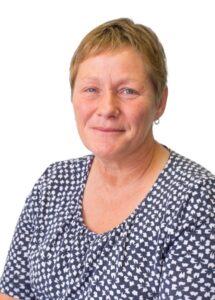
Melanie is the head of our Private Client Department and has over 30 years’ legal experience. In this position she is the supervisor for the work the firm carries out on Wills, trusts, probate and conveyancing.
Melanie has a wealth of experience having practised both as a solicitor and mediator. She currently assists clients with their Wills, Probates and Trusts. In the past she headed our family department.
During her career she has helped generations of families and has dealt with over 1000 probates, wills and financial remedy family cases. Melanie tends to work on cases with complex issues, and to date has worked on more than 100 contested probate cases.
Jayshree Patel

Jayshree Patel – Solicitor
Jayshree qualified as a solicitor in 2003 and brings broad experience across personal injury, employment, and private client law. After qualifying, she practised in personal injury for two years before taking a career break, during which she spent a year teaching Legal Practice Course modules in civil litigation, personal injury, and clinical negligence.
Jayshree joined Thomas Dunton Solicitors LLP in 2011, initially working within the Personal Injury and Employment Law Department. Her caseload included road traffic accident claims, public liability matters, and employers’ liability cases, giving her a strong foundation in client‑focused and practical legal work.
She is now a well‑established member of the Private Client Department, where her work includes drafting wills, preparing lasting powers of attorney, and assisting with Court of Protection matters. Jayshree is a member of the Association of Lifetime Lawyers, reflecting her commitment to providing specialist, sensitive advice to older and vulnerable clients.
In addition, Jayshree can speak Gujarati and understand Hindi.
Jayshree’s work is supervised by Melanie Dunton, Senior Partner.
Maria James

Maria James – Partner | Joint Head of Family Department | Probate Specialist
Maria James is a Partner and Joint Head of the Family Department at Thomas Dunton Solicitors LLP. She also works closely with our wills and probate team, advising on probate matters and the administration of estates.
Maria qualified as a solicitor in 1994 and joined Thomas Dunton Solicitors in February 2016 from a City practice. She is a Resolution Accredited Specialist in Financial Remedy, Children Act matters, and Child Abduction, reflecting her extensive experience in complex and sensitive cases.
Within the Family Department, Maria undertakes a broad and varied caseload, including divorce, dissolution, and separation matters, many involving substantial or complex financial issues. She also advises on disputes relating to children under the Children Act, including relocation applications. Maria has a particular interest in international children cases and is an Accredited Specialist in Child Abduction matters.
Thomas Dunton Solicitors is a panel member of the International Child Abduction and Contact Unit (ICACU), and Maria regularly acts for parents from around the world whose children have been wrongfully brought to the UK. She is also frequently instructed by parents who have brought their children to the UK without the agreement of the other parent and who are facing urgent court proceedings.
As part of her private client practice, Maria advises executors and beneficiaries on probate and the administration of estates. She supports clients at every stage of the process, providing clear, practical advice with a strong emphasis on efficiency, sensitivity, and attention to detail.