Do you have an email account? Social media accounts? Photographs stored in some kind of online storage? Have you ever considered what will happen to all of this when you’re no longer here? No? Well, you’re certainly not alone.
But in an age where so much of our lives exists online, protecting your digital assets is, arguably, as important as protecting your physical possessions. Here, Thomas Dunton Solicitors’ Partner and Wills and Probate Specialist, Catherine Crabtree, discusses the importance of planning for and protecting your digital legacy in more detail, and the problems your loved ones may face if you fail to do so before you pass away.
So, what exactly do we mean by digital assets?
Digital assets are anything you own that exist in a digital format. This includes cryptocurrencies, social media accounts, email accounts and online storage.
Why is it important to plan for your digital legacy?
Many people often don’t realise, or possibly overlook, how much valuable information is stored in our email and online profiles – from intellectual property, to cherished photographs. As a result, millions of adults in the UK risk leaving grieving loved ones without access to cherished memories and vital information by not planning accordingly.
As with your physical assets, by planning ahead, you can ensure your loved ones can access your online accounts and that your digital legacy is managed according to your wishes. Without proper planning, your loved ones may face significant challenges in accessing or managing these important parts of your life after you have gone, causing additional, and unnecessary, emotional distress.
How do you go about getting your digital assets in order?
We highly recommend keeping a log of all of your online assets and consider who you would like to be able to access these after your death. Creating a secure list and making sure it’s regularly updated and stored in a safe place, along with your will, will prove invaluable for those trying to manage your affairs in your absence.
Many online services, like Google, Apple and Facebook, allow you to appoint a legacy contact to access your accounts after you die. After a certain period of inactivity, and on request, your contact can be given a copy of all information stored on your account.
Facebook also have a memorialisation service, where they make people aware that someone has died.
Do you need a solicitor to help plan your digital legacy?
No, especially if you have all of your accounts in order.
However, we are seeing an increasing number of clients wanting to discuss and reference their digital assets in their will. The most common reasons for this include the desire to communicate and document their wishes clearly, to ensure their most treasured photographs of themselves with their loved ones are not lost when they have passed, and to protect intellectual property. They leave us with peace of mind that their family and friends will be spared any additional upset and stress in the event of their death.
Why Thomas Dunton?
We have been helping the local community for nearly 50 years and have built a reputation for being professional, approachable and sensitive when it comes to handling your legal concerns. We strive to ensure our clients understand the complexities of planning for the future and the potential pitfalls that may occur after death. The result? Much needed reassurance that the things that matter most to you will be dealt with just as you had hoped.
For more advice and guidance, contact us directly to arrange an appointment with one of our wills solicitors. Call us on 01689 822554 or email us at wills@thomasdunton.co.uk
What our clients say

Extremely professional & helpful, would recommend.
Beyond professional competence alone, Thomas Dunton takes the time to ensure their clients’ needs are fully understood and provided with excellent and timely support.
“I received a very prompt, professional and caring service from you at a very sad and distressing time”.
All the staff I met at Duntons were extremely friendly and helpful. I was given the reassurance, help, advice and support I very much needed during my visits to Duntons. A very professional team and Mrs Crabtree was deeply empathetic, which put me at ease. I will be returning in the future.
Telephoned to make an an appointment and received a friendly welcome on my arrival. I communicated my requirements to Mrs Crabtree. She provided excellent professional advice and I had every confidence that she would carry out my wishes with regard to my personal situation. She explained everything to me when I attended to sign my will and answered my query and I felt exceedingly confident that all was concluded to my satisfaction.
We were quite nervous about going ahead with Power of Attorney for Health and Welfare but were quickly put at ease.
Meet the Specialists
Catherine Crabtree

Catherine Crabtree – Partner and Head of Private Client Department
Catherine is a partner and head of the private client department at Thomas Dunton Solicitors LLP.
Catherine qualified as a solicitor in 2002. She graduated from Oxford in 1998 and then studied the Common Professional Examination and Legal Practice Course at the College of Law, gaining a commendation in the CPE and a distinction in the LPC. She completed her training contract at Ashurst and continued to work in the City until taking a career break in 2005 to care for her children. In 2014, Catherine sat STEP’s Advanced Certificate in Will Preparation and passed with distinction. She is now an affiliate member of STEP.
Catherine has worked in Thomas Dunton’s private client department since 2014 and has helped well over a thousand clients in this time, mainly in the area of wills, inheritance tax, lasting powers of attorney and probate. Catherine enjoys learning and undertakes a wide range of continuous professional development.
Read more on how Catherine and the private client team can help plan your future.
Melanie Dunton
Melanie Dunton – a Senior Partner and Head of Private Client Department
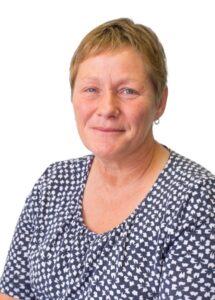
Melanie is the head of our Private Client Department and has over 30 years’ legal experience. In this position she is the supervisor for the work the firm carries out on Wills, trusts, probate and conveyancing.
Melanie has a wealth of experience having practised both as a solicitor and mediator. She currently assists clients with their Wills, Probates and Trusts. In the past she headed our family department.
During her career she has helped generations of families and has dealt with over 1000 probates, wills and financial remedy family cases. Melanie tends to work on cases with complex issues, and to date has worked on more than 100 contested probate cases.
Jayshree Patel

Jayshree Patel – Solicitor
Jayshree qualified as a solicitor in 2003 and brings broad experience across personal injury, employment, and private client law. After qualifying, she practised in personal injury for two years before taking a career break, during which she spent a year teaching Legal Practice Course modules in civil litigation, personal injury, and clinical negligence.
Jayshree joined Thomas Dunton Solicitors LLP in 2011, initially working within the Personal Injury and Employment Law Department. Her caseload included road traffic accident claims, public liability matters, and employers’ liability cases, giving her a strong foundation in client‑focused and practical legal work.
She is now a well‑established member of the Private Client Department, where her work includes drafting wills, preparing lasting powers of attorney, and assisting with Court of Protection matters. Jayshree is a member of the Association of Lifetime Lawyers, reflecting her commitment to providing specialist, sensitive advice to older and vulnerable clients.
In addition, Jayshree can speak Gujarati and understand Hindi.
Jayshree’s work is supervised by Melanie Dunton, Senior Partner.
Maria James

Maria James – Partner | Joint Head of Family Department | Probate Specialist
Maria James is a Partner and Joint Head of the Family Department at Thomas Dunton Solicitors LLP. She also works closely with our wills and probate team, advising on probate matters and the administration of estates.
Maria qualified as a solicitor in 1994 and joined Thomas Dunton Solicitors in February 2016 from a City practice. She is a Resolution Accredited Specialist in Financial Remedy, Children Act matters, and Child Abduction, reflecting her extensive experience in complex and sensitive cases.
Within the Family Department, Maria undertakes a broad and varied caseload, including divorce, dissolution, and separation matters, many involving substantial or complex financial issues. She also advises on disputes relating to children under the Children Act, including relocation applications. Maria has a particular interest in international children cases and is an Accredited Specialist in Child Abduction matters.
Thomas Dunton Solicitors is a panel member of the International Child Abduction and Contact Unit (ICACU), and Maria regularly acts for parents from around the world whose children have been wrongfully brought to the UK. She is also frequently instructed by parents who have brought their children to the UK without the agreement of the other parent and who are facing urgent court proceedings.
As part of her private client practice, Maria advises executors and beneficiaries on probate and the administration of estates. She supports clients at every stage of the process, providing clear, practical advice with a strong emphasis on efficiency, sensitivity, and attention to detail.